Aloe vera
Aloe vera
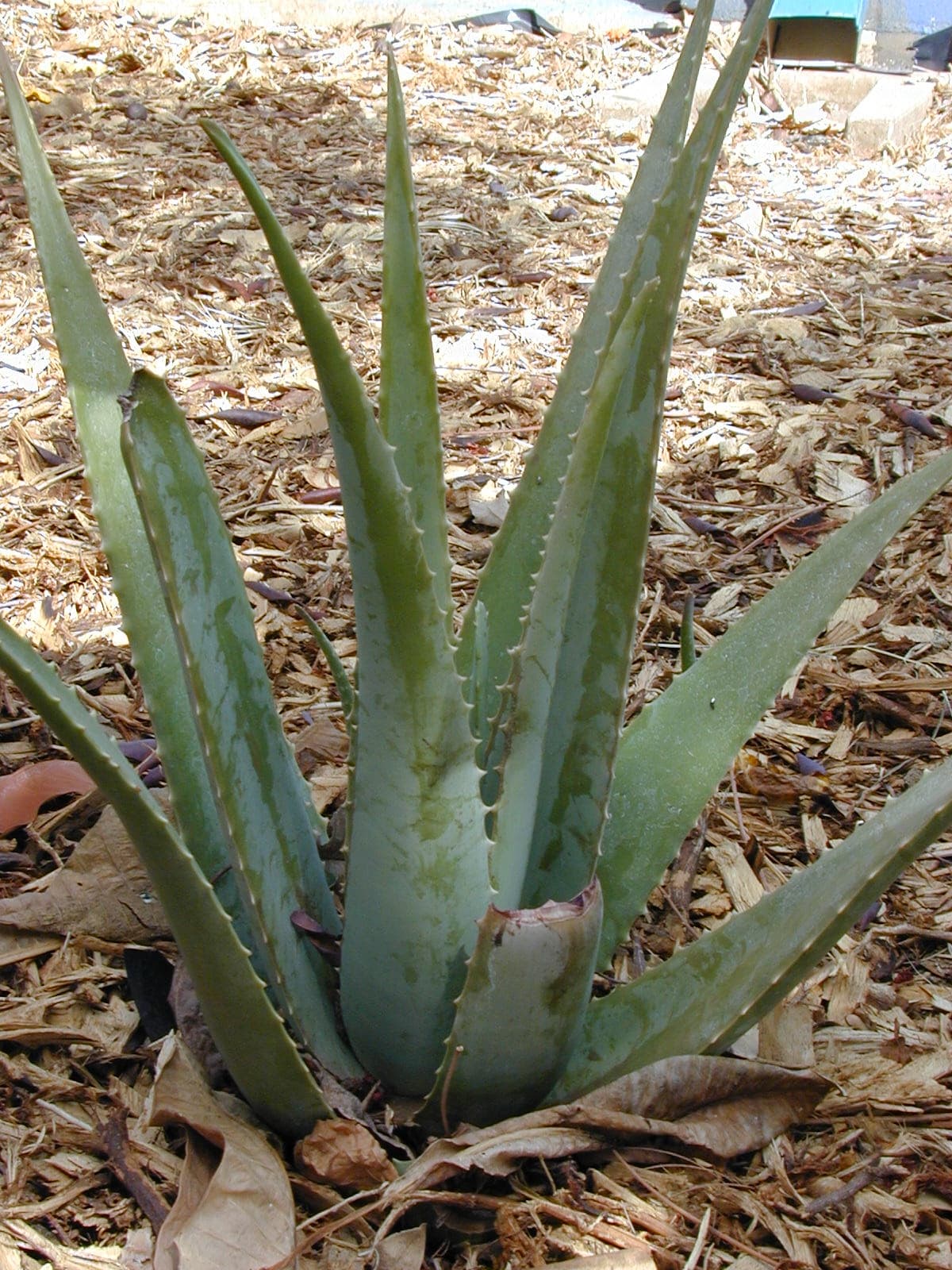
A succulent whose thick leaves hold a clear inner gel and a bitter yellow latex just under the skin. The gel is used on the skin and for burns, while the latex is the source of aloe's laxative effect.
- Category
- Medicinal
- Found in
- West, East and North AfricaPOWO
- Data sources
- Published literature
Local names
Known in 3 languages across 2 regions
Say it in
Yoruba · West Africa
Eti erin
also Asejo Elewa
West Africa
East Africa
Spot a wrong name, or know another one?Tell us here ↗
Traditional & Common Uses
Important medical disclaimer
The information below is for educational reference only. It does not constitute medical advice. Always consult a qualified healthcare provider.
- General
Gel applied to wounds and burns; healing has been shown in animal studies, though human clinical trial results are mixed.
[1] Tang Center for Herbal Medicine Research, University of Chicago. Aloe (tangcenter.uchicago.edu).
- General
Taken internally for digestive problems, asthma, diabetes, and gum disease, and applied to the skin for skin conditions and burns.
[2] Phytochemistry, Pharmacology and Toxicity of Aloe vera: A Versatile Plant with Extensive Therapeutic Potential. Plant Archives. (Author names not confirmed.)
- General
Dried leaf juice (latex) used as a stimulant laxative for constipation.
[3] European Medicines Agency (2007). Assessment report on Aloe barbadensis Miller and Aloe (various species, mainly Aloe ferox Miller) and its preparations (superseded).
Known Phytochemicals
Cautions & Contraindications
- highSignificant risk documented in literature
- moderatePotential risk; caution advised
- high
Oral use is contraindicated during pregnancy and breastfeeding, because experimental data point to a genotoxic risk from some of its anthranoid compounds.
[4] Egyptian Drug Authority (2026). Egyptian Herbal Monograph: Aloe vera.
- moderate
Prolonged laxative use can cause potassium loss, which may interact with heart medications, diuretics, and corticosteroids; people with diabetes should consult a doctor or pharmacist before using aloe gel.
[4] Egyptian Drug Authority (2026). Egyptian Herbal Monograph: Aloe vera.
- moderate
Its anthraquinone compounds raise questions about the safety of oral consumption, and a review advises caution.
[6] The dark side of miracle plant – Aloe vera: a review. Molecular Biology Reports, 49(6), 5029–5040 (2022). doi:10.1007/s11033-022-07176-9
Sources & Citations
- 1Tang Center for Herbal Medicine Research, University of Chicago. Aloe (tangcenter.uchicago.edu).
- 2Phytochemistry, Pharmacology and Toxicity of Aloe vera: A Versatile Plant with Extensive Therapeutic Potential. Plant Archives. (Author names not confirmed.)
- 3European Medicines Agency (2007). Assessment report on Aloe barbadensis Miller and Aloe (various species, mainly Aloe ferox Miller) and its preparations (superseded).
- 4Egyptian Drug Authority (2026). Egyptian Herbal Monograph: Aloe vera.
- 5The phytochemical constituents and therapeutic uses of genus Aloe: A review. Notulae Botanicae Horti Agrobotanici Cluj-Napoca. (Author names not confirmed.)
- 6The dark side of miracle plant – Aloe vera: a review. Molecular Biology Reports, 49(6), 5029–5040 (2022). doi:10.1007/s11033-022-07176-9
- 7Paukwa (Kenyan heritage site): Aloes, "mshubiri (Swahili)" for aloes generally