Bitter leaf
Vernonia amygdalina
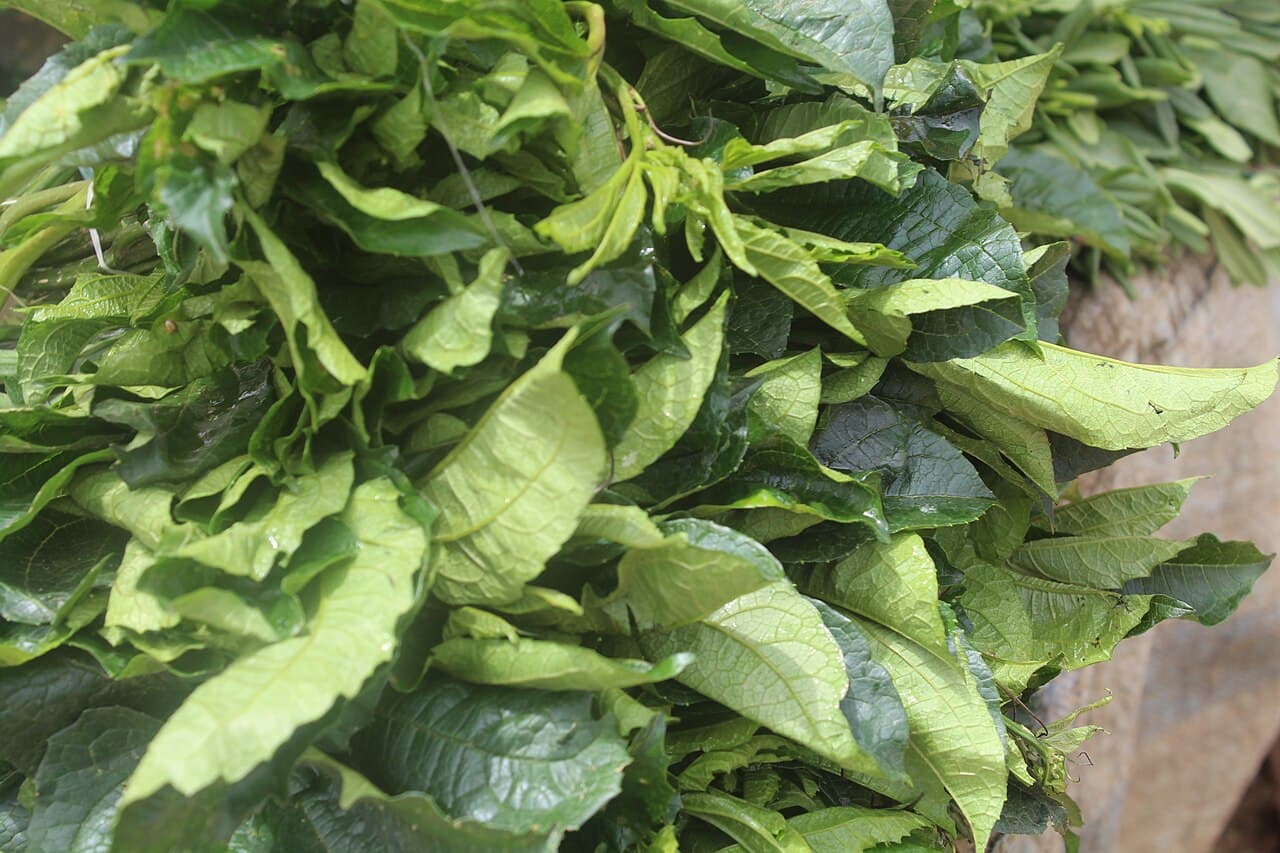
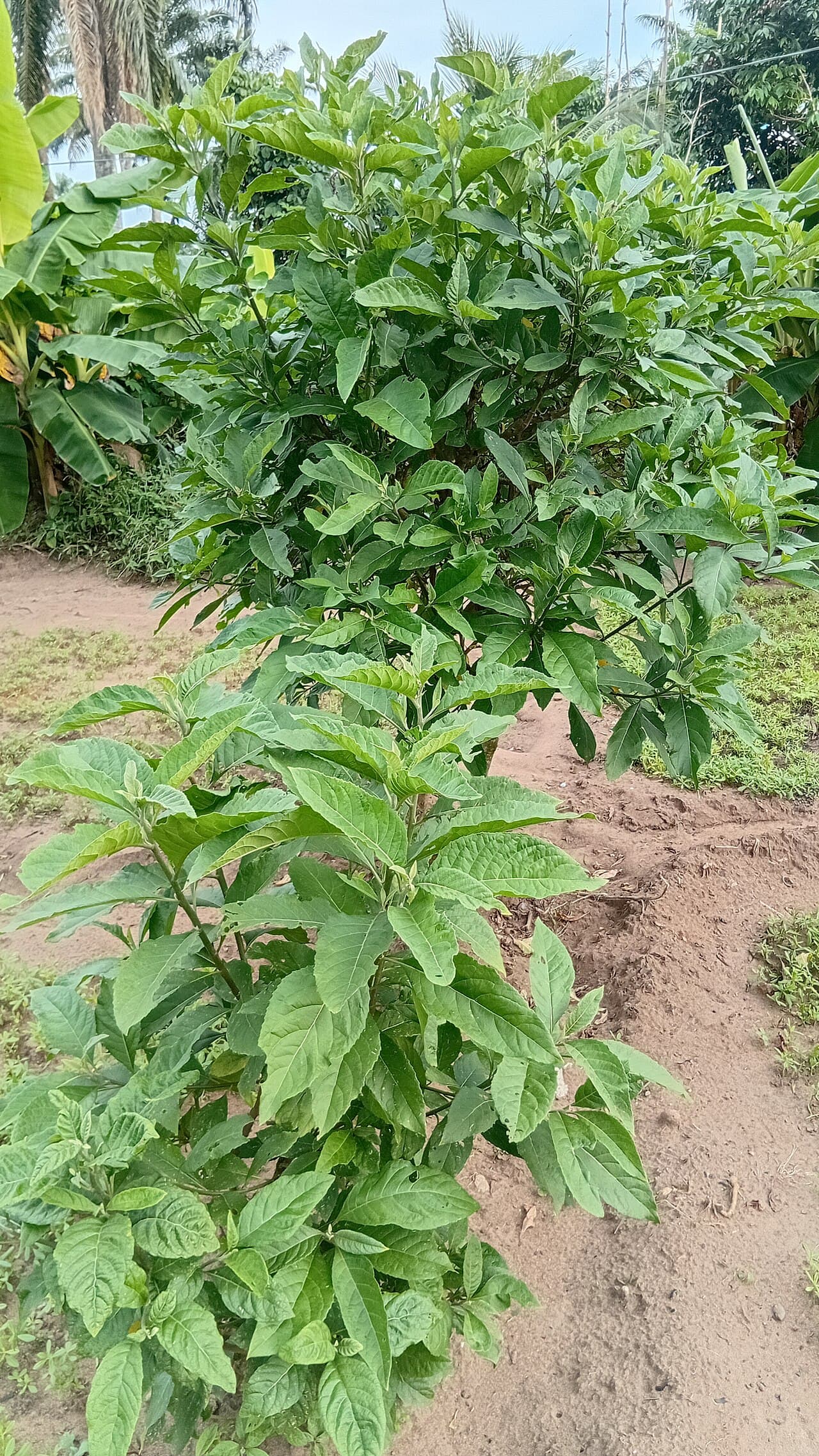
A small shrub with bitter-tasting leaves, widely grown across tropical Africa and one of the most-used vegetables and traditional remedies in Nigeria. The leaves are cooked as a vegetable in soups and separately used in traditional medicine for a wide range of ailments.
- Categories
- Leafy Vegetable, Medicinal
- Found in
- West, Central, East and Southern AfricaPOWO
- Data sources
- NMPPDB, Dr. Duke's, other literature
Local names
Known in 6 languages
Say it in
Yoruba · West Africa
Ewuro
West Africa
Spot a wrong name, or know another one?Tell us here ↗
Traditional & Common Uses
Important medical disclaimer
The information below is for educational reference only. It does not constitute medical advice. Always consult a qualified healthcare provider.
- General
Used traditionally for infections; leaf extracts have shown activity against Staphylococcus aureus and E. coli in lab studies.
[1] Erasto et al. (2007), via NMPPDB (nmppdb.com.ng)
- Ghana
Used in Ghana for arthritis; associated with reduced inflammation in animal studies.
[2] Adedapo et al. (2014), via NMPPDB (nmppdb.com.ng)
- Cameroon
Used in Cameroon for oxidative stress; leaf extracts show free-radical scavenging activity in lab studies.
[1] Erasto et al. (2007), via NMPPDB (nmppdb.com.ng)
- Nigeria
Widely used in Nigeria for managing type 2 diabetes; associated with lowered blood glucose in animal studies.
[3] Ijeh & Ejike (2011), via NMPPDB (nmppdb.com.ng)
- Togo
Used in Togo for cardiovascular health; associated with reduced LDL cholesterol in animal studies.
[4] Adaramoye et al. (2008), via NMPPDB (nmppdb.com.ng)
- Uganda
Leaf infusions used in Uganda to treat dysentery; tannin content linked to gut health support.
[5] Yeap et al. (2010), via NMPPDB (nmppdb.com.ng)
- General
Traditionally used for malaria, with documented antimalarial activity.
[6] NMPPDB (nmppdb.com.ng)
- Nigeria
Used in Nigeria for liver cleansing/detoxification; associated with liver protection in animal studies.
[7] Farombi & Owoeye (2011), via NMPPDB (nmppdb.com.ng)
- South Africa
Used in South Africa for tumor prevention; vernolide shown to induce apoptosis in cancer cells in lab studies.
[8] Toyang & Verpoorte (2013), via NMPPDB (nmppdb.com.ng)
- Ethiopia
Used in Ethiopia for menstrual issues; leaf extracts shown to enhance uterine contractions in animal studies.
[9] Kamatenesi-Mugisha & Oryem-Origa (2007), via NMPPDB (nmppdb.com.ng)
- Guinea
Taken as a tonic in Guinea.
[10] Ayensu, E.S. (1978). Medicinal Plants of West Africa. Reference Publications, Inc. — via Duke's Ethnobotanical Database
- Angola
Used in Angola for diarrhea and fever.
[10] Ayensu, E.S. (1978). Medicinal Plants of West Africa. Reference Publications, Inc. — via Duke's Ethnobotanical Database
- Côte d'Ivoire
Used in Côte d'Ivoire for fever, pneumonia and gonorrhea.
[10] Ayensu, E.S. (1978). Medicinal Plants of West Africa. Reference Publications, Inc. — via Duke's Ethnobotanical Database
- Ghana
Used in Ghana to stimulate the appetite, as a purgative, and for coughs.
[10] Ayensu, E.S. (1978). Medicinal Plants of West Africa. Reference Publications, Inc. — via Duke's Ethnobotanical Database
- Tanzania
Used in Tanzania for coughs and as an antidote to poisoning.
[10] Ayensu, E.S. (1978). Medicinal Plants of West Africa. Reference Publications, Inc. — via Duke's Ethnobotanical Database
Known Phytochemicals
Cautions & Contraindications
- highSignificant risk documented in literature
- moderatePotential risk; caution advised
- lowMinimal risk under normal conditions
- high
Pregnant women are advised to avoid it due to potential abortifacient risk.
[7] Farombi & Owoeye (2011), via NMPPDB (nmppdb.com.ng)
- moderate
No acute toxicity observed at traditional doses in animal studies; excessive use may cause nausea, hypoglycemia, or uterine stimulation.
[7] Farombi & Owoeye (2011), via NMPPDB (nmppdb.com.ng)
- low
May reduce iron absorption with regular use.
[7] Farombi & Owoeye (2011), via NMPPDB (nmppdb.com.ng)
Sources & Citations
- 1Erasto et al. (2007), via NMPPDB (nmppdb.com.ng)
- 2Adedapo et al. (2014), via NMPPDB (nmppdb.com.ng)
- 3Ijeh & Ejike (2011), via NMPPDB (nmppdb.com.ng)
- 4Adaramoye et al. (2008), via NMPPDB (nmppdb.com.ng)
- 5Yeap et al. (2010), via NMPPDB (nmppdb.com.ng)
- 6NMPPDB (nmppdb.com.ng)
- 7Farombi & Owoeye (2011), via NMPPDB (nmppdb.com.ng)
- 8Toyang & Verpoorte (2013), via NMPPDB (nmppdb.com.ng)
- 9Kamatenesi-Mugisha & Oryem-Origa (2007), via NMPPDB (nmppdb.com.ng)
- 10Ayensu, E.S. (1978). Medicinal Plants of West Africa. Reference Publications, Inc. — via Duke's Ethnobotanical Database
- 11Infonet-Biovision: Bitter leaf (Twi), citing Appiah et al. (2018)