Garden egg
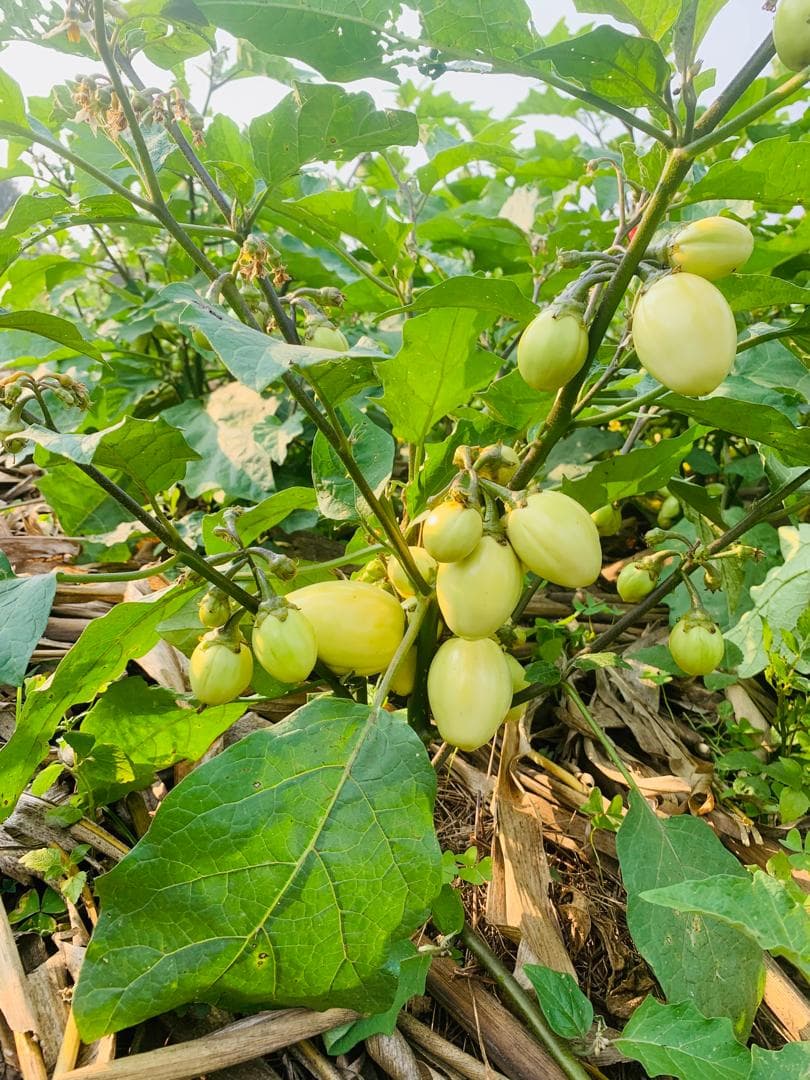
Solanum aethiopicum
A widely grown fruiting vegetable across Nigeria and West Africa, eaten fresh, cooked in stews, or pickled. Used both as a staple food crop and, in some communities, as a traditional remedy.
- Category
- Vegetable
- Found in
- Across AfricaPOWO
- Data sources
- Published literature
Local names
Known in 5 languages across 2 regions
Say it in
Yoruba · West Africa
Igba
West Africa
East Africa
Spot a wrong name, or know another one?Tell us here ↗
Traditional & Common Uses
Important medical disclaimer
The information below is for educational reference only. It does not constitute medical advice. Always consult a qualified healthcare provider.
- General
Fruit extract shown to protect against experimentally induced stomach ulcers in rats, comparable to a standard ulcer medication (ranitidine).
[1] University of Nigeria, Nsukka research paper, "Does the African garden egg offer protection against experimentally induced ulcers?" (full journal citation not confirmed — sourced from a UNN institutional PDF)
- General
Fruit extract shown to reduce inflammation in animal studies, consistent with reports that people who eat it often experience relief from arthritic pain and swelling.
[2] Study published via Springer, DOI: 10.1186/2008-2231-20-76
- General
Used in ethnomedicine for anaemia, constipation, and weight management; leaf extract shown to improve markers of anaemia and support liver/kidney function in rats.
[3] Ekweogu, C.N., Ude, V.C., Nwankpa, P., Emmanuel, O., & Ugbogu, E.A. (2019). Toxicological Research, 36(3), 227–238.
Known Phytochemicals
Cautions & Contraindications
No cautions recorded in our sources yet. That is not the same as safe: ask a healthcare professional.
Sources & Citations
- 1University of Nigeria, Nsukka research paper, "Does the African garden egg offer protection against experimentally induced ulcers?" (full journal citation not confirmed — sourced from a UNN institutional PDF)
- 2Study published via Springer, DOI: 10.1186/2008-2231-20-76
- 3Ekweogu, C.N., Ude, V.C., Nwankpa, P., Emmanuel, O., & Ugbogu, E.A. (2019). Toxicological Research, 36(3), 227–238.
- 4Plazas, M., Prohens, J., Cuñat, A.N., et al. (2014). Reducing capacity, chlorogenic acid content and biological activity in a collection of scarlet (Solanum aethiopicum) and gboma (S. macrocarpon) eggplants. International Journal of Molecular Sciences, 15(10), 17221–17241.
- 5Nwanna, E.E., Ibukun, E.O., Oboh, G., et al. (2014). HPLC-DAD analysis and in-vitro property of polyphenols extracts from (Solanum aethiopium) fruits on α-amylase, α-glucosidase and angiotensin-1-converting enzyme activities. International Journal of Biomedical Science, 10(4), 272–281.
- 6Mbondo, N.N., Owino, W.O., Ambuko, J., & Sila, D.N. (2018). Effect of drying methods on the retention of bioactive compounds in African eggplant. Food Science & Nutrition, 6(4), 814–823.
- 7Lester & Seck (2004), PROTA4U (Plant Resources of Tropical Africa): Solanum aethiopicum
- 8Akan (Twi) Dictionary, akandictionary.com: Nyaadewa (garden eggs)