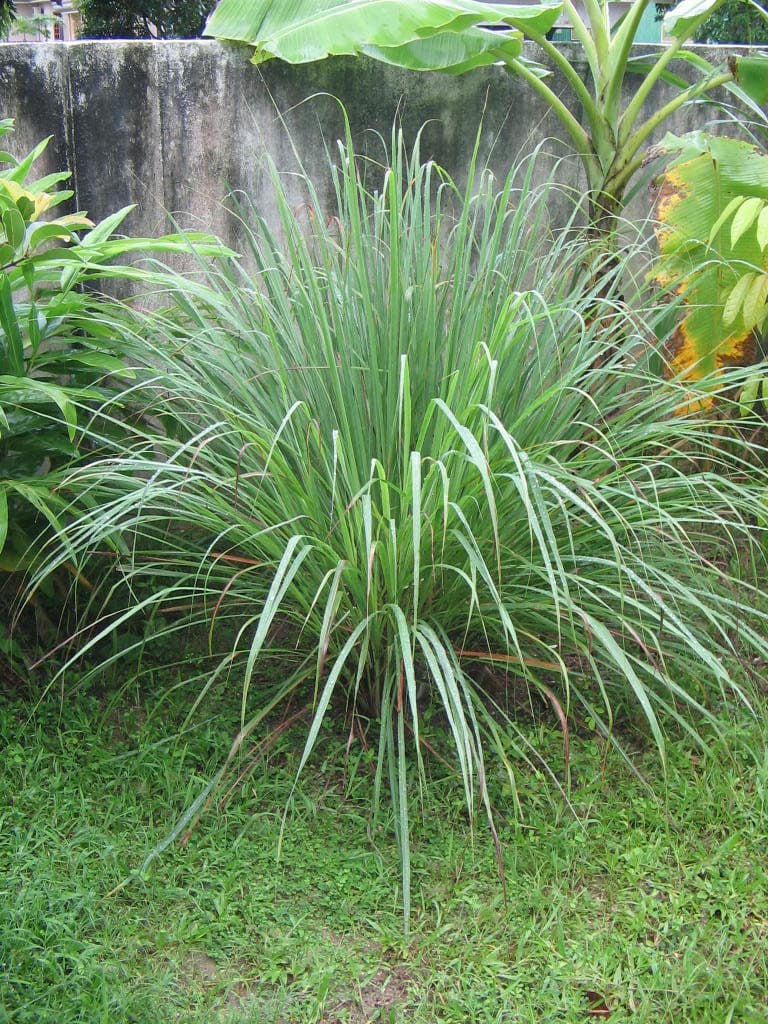
Lemongrass
Cymbopogon citratus
A tall, tufted perennial grass with a strong lemon scent, native to South and Southeast Asia and now widely grown in Nigeria. The stalks flavor teas, soups, and curries, and the essential oil is used in aromatherapy, cosmetics, and as a natural insect repellent.
- Categories
- Medicinal, Beverage
- Found in
- West, Central, East and North AfricaPOWO
- Data sources
- Published literature
Local names
Known in 4 languages
Say it in
Yoruba · West Africa
Kooko-Oba
also Ewe Tea
West Africa
Spot a wrong name, or know another one?Tell us here ↗
Traditional & Common Uses
Important medical disclaimer
The information below is for educational reference only. It does not constitute medical advice. Always consult a qualified healthcare provider.
- General
Essential oil used in aromatherapy in Thailand to reduce anxiety; inhalation has been shown to lower stress-hormone (cortisol) levels in humans.
[1] Leite, J.R. et al. (1986). Journal of Ethnopharmacology, 17(1), 75–83.
- Nigeria
Used in Nigeria for its antimicrobial properties; the oil inhibits Staphylococcus aureus and is effective against Candida albicans in lab tests.
[2] Boukhatern, M.N., Ferhat, M.A., Kameli, A., Saidi, F., & Mekarnia, M. (2014). Lemon grass (Cymbopogon citratus) essential oil as a potent anti-inflammatory and antifungal drug. Libyan Journal of Medicine, 9, 25431.
- Brazil
Leaf infusion used in Brazil to reduce inflammation; citral (its main aromatic compound) has been shown to block a key inflammatory signaling pathway in lab studies.
[3] Francisco, V. et al. (2013). Journal of Ethnopharmacology, 148(1), 126–134.
- General
Tea used in the Philippines for headaches; citral has been shown to reduce pain responses in rats.
[4] Viana, G.S., Vale, T.G., Pinho, R.S., & Matos, F.J. (2010). Journal of Ethnopharmacology, 129(3), 416–419.
- India
Tea used in India as a digestive aid; aqueous extracts relieve intestinal spasms in lab tests.
[5] Figueirinha, A. et al. (2008). Food Chemistry, 110(3), 718–728.
- Ghana
Used in Ghana for detoxification; its polyphenols show strong free-radical-scavenging (antioxidant) activity in lab tests.
[6] Cheel, J., Theoduloz, C., Rodríguez, J., & Schmeda-Hirschmann, G. (2005). Journal of Agricultural and Food Chemistry, 53(7), 2511–2517.
Known Phytochemicals
Cautions & Contraindications
- lowMinimal risk under normal conditions
- low
Generally safe in food amounts, with low toxicity for the essential oil at tested doses. Undiluted essential oil may cause skin irritation in some people, and it is best avoided in pregnancy due to limited safety data.
[8] Oladeji, O.S., Adelowo, F.E., & Oyelakin, A.O. (2020). Scientific African, 9, e00437.
Sources & Citations
- 1Leite, J.R. et al. (1986). Journal of Ethnopharmacology, 17(1), 75–83.
- 2Boukhatern, M.N., Ferhat, M.A., Kameli, A., Saidi, F., & Mekarnia, M. (2014). Lemon grass (Cymbopogon citratus) essential oil as a potent anti-inflammatory and antifungal drug. Libyan Journal of Medicine, 9, 25431.
- 3Francisco, V. et al. (2013). Journal of Ethnopharmacology, 148(1), 126–134.
- 4Viana, G.S., Vale, T.G., Pinho, R.S., & Matos, F.J. (2010). Journal of Ethnopharmacology, 129(3), 416–419.
- 5Figueirinha, A. et al. (2008). Food Chemistry, 110(3), 718–728.
- 6Cheel, J., Theoduloz, C., Rodríguez, J., & Schmeda-Hirschmann, G. (2005). Journal of Agricultural and Food Chemistry, 53(7), 2511–2517.
- 7Cheel, J. et al. (2005). Journal of Agricultural and Food Chemistry, 53(7), 2511–2517.
- 8Oladeji, O.S., Adelowo, F.E., & Oyelakin, A.O. (2020). Scientific African, 9, e00437.
- 9African Plants, KNUST Department of Pharmacology: Cymbopogon citratus (Fante)