Ginger
Zingiber officinale
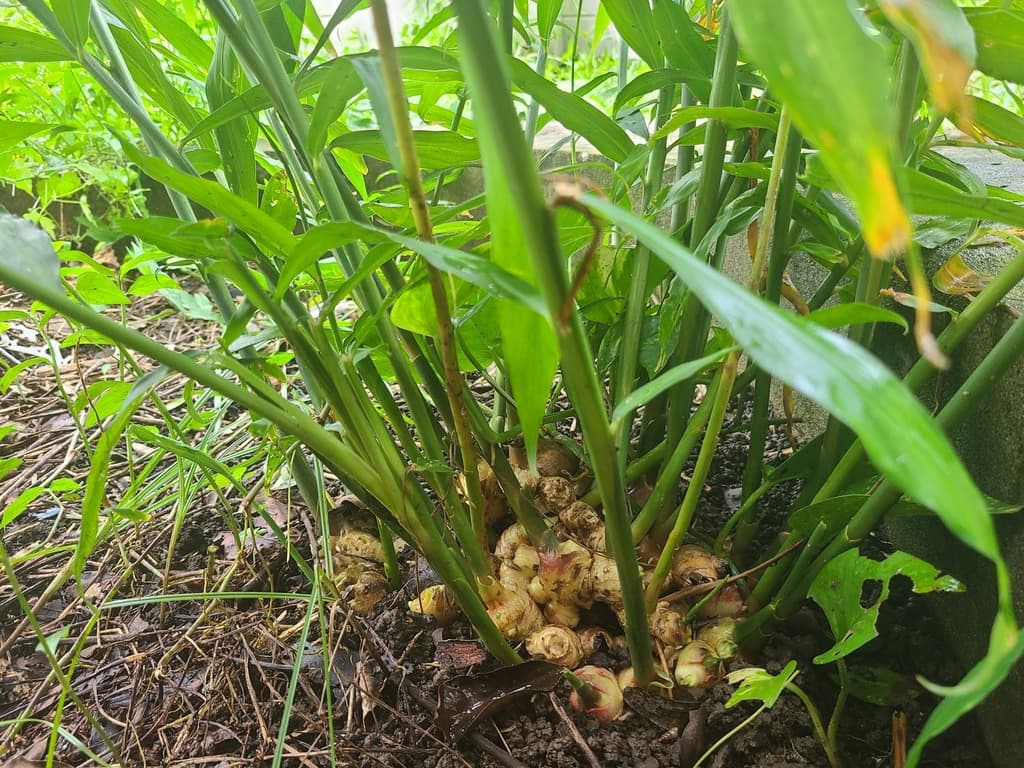
A perennial herb grown for its aromatic, knobby rhizome, used fresh or dried as both a kitchen spice and a long-standing traditional medicine across Ayurvedic, Chinese, and African systems. Nigeria is among the countries where it is cultivated at scale.
- Categories
- Spice, Medicinal
- Found in
- West, Central, East and Southern Africa
- Data sources
- NMPPDB, Dr. Duke's, other literature
Local names
Known in 6 languages across 2 regions
Say it in
Yoruba · West Africa
Ata-ile
West Africa
East Africa
Spot a wrong name, or know another one?Tell us here ↗
Traditional & Common Uses
Important medical disclaimer
The information below is for educational reference only. It does not constitute medical advice. Always consult a qualified healthcare provider.
- India
Rhizome used in India to relieve arthritis pain.
[1] NMPPDB (nmppdb.com.ng)
- General
Used in China for oxidative stress; gingerols show free-radical-scavenging activity in lab tests.
[2] Mao, Q.Q. et al. (2019). Bioactive compounds and bioactivities of ginger (Zingiber officinale Roscoe). Foods, 8(6), 185.
- General
Used in Thailand for morning sickness; shown in a clinical trial to reduce nausea in pregnancy at about 1 g/day.
[3] Vutyavanich, T., Kraisarin, T., & Ruangsri, R. (2001). Obstetrics & Gynecology, 97(4), 577–582.
- Nigeria
Used in Nigeria as a digestive aid; shown to enhance gastric motility.
[4] Giacosa, A. et al. (2015). European Review for Medical and Pharmacological Sciences, 19(7), 1291–1296.
- General
Used in Malaysia for muscle pain; shown to reduce pain in patients with knee osteoarthritis.
[5] Altman, R.D., & Marcussen, K.C. (2001). Arthritis & Rheumatism, 44(11), 2531–2538.
- Ghana
Used in Ghana for infections; shown to inhibit E. coli growth in lab tests.
[6] Akoachere, J.F. et al. (2002). East African Medical Journal, 79(11), 588–592.
- Burkina Faso
Used in Burkina Faso as an aphrodisiac.
[7] Ayensu, E.S. (1978). Medicinal Plants of West Africa. Reference Publications, Inc. — via Duke's Ethnobotanical Database
- Egypt
Used in Egypt for indigestion, flatulence, gout and rheumatism, and as a stimulant.
[8] Täckholm, V. & Täckholm, G. (1973 reprint). Flora of Egypt, Vols. 1–4 — via Duke's Ethnobotanical Database
- Egypt
Used in Egypt against head lice and to flavor liqueurs.
[8] Täckholm, V. & Täckholm, G. (1973 reprint). Flora of Egypt, Vols. 1–4 — via Duke's Ethnobotanical Database
Known Phytochemicals
Cautions & Contraindications
- moderatePotential risk; caution advised
- moderate
Safe at typical culinary doses (up to about 4 g/day). Higher doses (over 5 g/day) may cause heartburn or diarrhea. Ginger may strengthen the effect of blood-thinning medication or lower blood sugar too much, so caution is advised alongside such medicines and in pregnancy beyond ordinary food amounts.
[10] Ali, B.H., Blunden, G., Tanira, M.O., & Nemmar, A. (2008). Some phytochemical, pharmacological and toxicological properties of ginger (Zingiber officinale Roscoe): A review of recent research. Food and Chemical Toxicology, 46(2), 409–420.
Sources & Citations
- 1NMPPDB (nmppdb.com.ng)
- 2Mao, Q.Q. et al. (2019). Bioactive compounds and bioactivities of ginger (Zingiber officinale Roscoe). Foods, 8(6), 185.
- 3Vutyavanich, T., Kraisarin, T., & Ruangsri, R. (2001). Obstetrics & Gynecology, 97(4), 577–582.
- 4Giacosa, A. et al. (2015). European Review for Medical and Pharmacological Sciences, 19(7), 1291–1296.
- 5Altman, R.D., & Marcussen, K.C. (2001). Arthritis & Rheumatism, 44(11), 2531–2538.
- 6Akoachere, J.F. et al. (2002). East African Medical Journal, 79(11), 588–592.
- 7Ayensu, E.S. (1978). Medicinal Plants of West Africa. Reference Publications, Inc. — via Duke's Ethnobotanical Database
- 8Täckholm, V. & Täckholm, G. (1973 reprint). Flora of Egypt, Vols. 1–4 — via Duke's Ethnobotanical Database
- 9Pan, M.H. et al. (2008). Molecular Nutrition & Food Research, 52(5), 527–537.
- 10Ali, B.H., Blunden, G., Tanira, M.O., & Nemmar, A. (2008). Some phytochemical, pharmacological and toxicological properties of ginger (Zingiber officinale Roscoe): A review of recent research. Food and Chemical Toxicology, 46(2), 409–420.
- 11Brook (2022), "Which Arabic Dialect Are Swahili Words From?", Studia Orientalia Electronica 10(1), p. 8
- 12Akan (Twi) Dictionary, akandictionary.com: Akekaduro (ginger)